Las Vegas Bus Accident Lawyer
Bus Accident? Don't Let Insurance Push You Around.
Free Consultation

Best Accident Lawyer




Bus Accident? Don't Let Insurance Push You Around.
Free ConsultationOur team at Cameron Law is here to support you throughout this process.
We will reach out to you within the next 24 hours regarding your case. Our team at Cameron Law is here to support you throughout this process.
Available 24/7
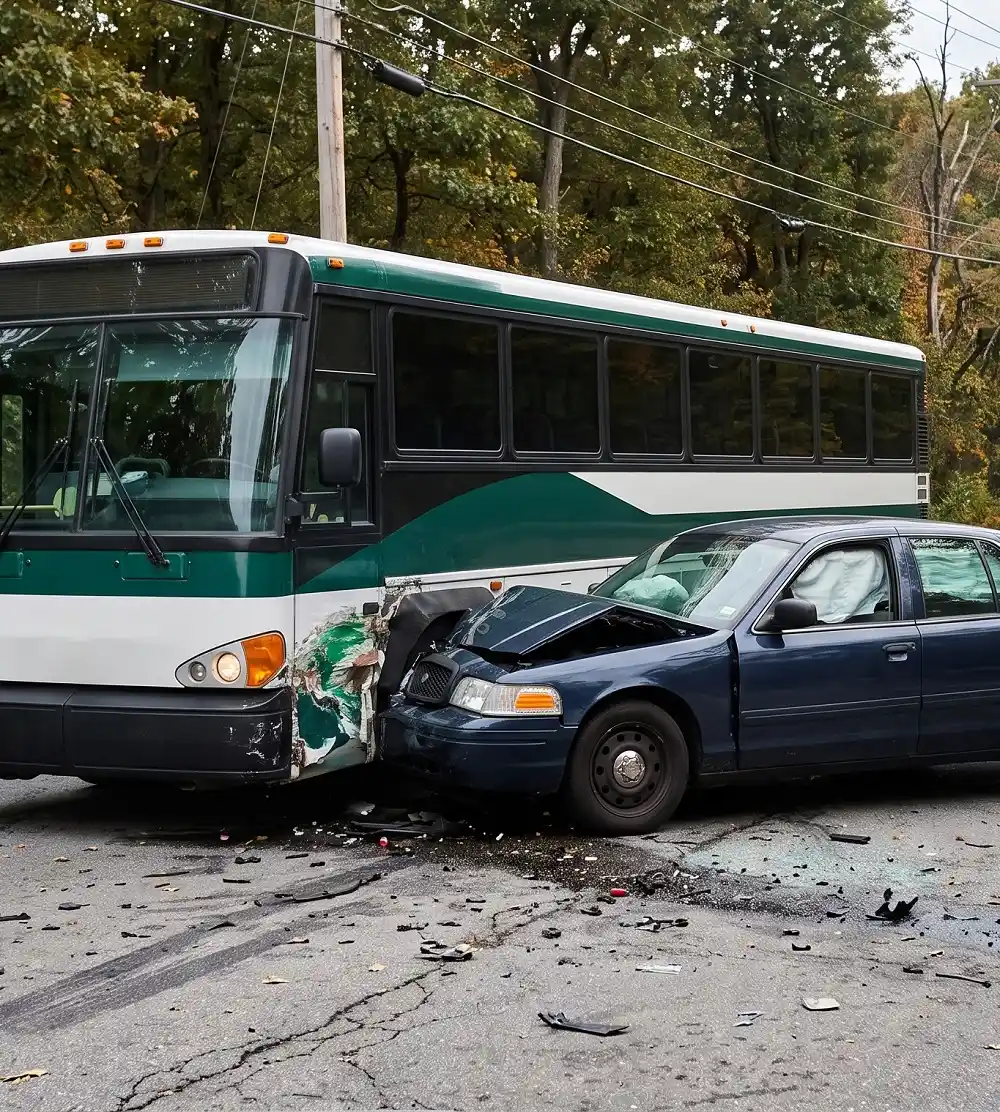
A Deuce sideswipes your rideshare on Las Vegas Boulevard, or a tour bus rear-ends you on the way back from Hoover Dam, and suddenly you are dealing with a commercial insurer that handles bus crashes for a living. The rules are not the ones that governed the last fender bender you saw.
Cameron Law represents injured passengers, pedestrians, and drivers hurt in bus accidents across Las Vegas, Spring Valley, Reno, and the surrounding valley. Our Las Vegas bus accident lawyers pursue claims involving RTC transit buses, the Deuce, tour buses, charter coaches, hotel and airport shuttles, and school buses. Because Nevada treats these operators as common carriers, they owe a higher duty of care than an ordinary driver, and that legal standard often decides who pays after a crash.

At Cameron Law, our experienced Las Vegas bus accident lawyers know that being involved in a bus accident can be a traumatic and overwhelming experience. That's why we prioritize a client-focused approach, ensuring you feel heard, understood, and supported every step of the way. We meticulously handle each bus accident case with the utmost care and attention, recognizing that every situation is unique.
Here's how we fight for you:
Our skilled Las Vegas bus accident lawyers leave no stone unturned when reconstructing what happened on the Strip, on RTC transit routes, or on the highways leading out of the valley. We gather police reports, witness statements, surveillance footage, accident reconstruction data, and, where available, the bus's engine control module and driver logs to build a strong case on your behalf.
Bus accident liability in Las Vegas often reaches beyond the driver to the bus company, a maintenance contractor, a parts manufacturer, or a government entity such as the RTC. We identify every potentially liable party so you can pursue the full compensation you deserve rather than settling with the first insurer that calls.
Commercial bus carriers and their insurers use experienced adjusters trained to minimize payouts, and our attorneys push back with documented evidence of your losses. We negotiate to secure a fair settlement that covers medical bills, lost wages, pain and suffering, and other damages tied to your bus accident injuries.
If a bus accident insurer refuses to offer a fair settlement, we are fully prepared to litigate your case in Clark County District Court. Our trial-ready approach signals to defense counsel that lowball offers will not end the case, which often moves negotiations forward on better terms.
Bus accidents can occur in various ways, each presenting unique legal challenges. Understanding the specific type of bus accident you were involved in is crucial for building a strong claim for compensation.
Some common types of bus accidents in Las Vegas include:
Rollover bus accidents often occur when a top-heavy vehicle takes a curve at excessive speed or when a driver overcorrects to avoid a hazard. Because most transit buses have no passenger seat belts, occupants are frequently thrown across the cabin, causing head, spine, and crush injuries.
Buses need far more stopping distance than passenger vehicles, so a distracted or tailgating bus driver can slam into slowed traffic on Interstate 15 or the Strip corridor with devastating force. The passengers in front of that impact commonly suffer whiplash, herniated discs, and concussions.
Head-on bus crashes are among the deadliest, usually triggered by an impaired, drowsy, or distracted driver crossing the center line. The combined impact forces regularly cause catastrophic injuries or fatalities, particularly on Nevada's rural highways and tour bus routes to the Grand Canyon and Hoover Dam.
Failure to yield the right-of-way, running red lights, or misjudging a wide left turn can send a bus into a T-bone or side-impact crash at Las Vegas intersections. These collisions often involve multiple vehicles and complicate questions about which driver, company, or government entity is at fault.
Buses pose a serious risk to pedestrians and cyclists along the Strip, downtown Fremont Street, and RTC transit stops because of their size and wide blind spots. A bus driver who fails to check mirrors before turning or pulling from a curb can strike people crossing lawfully in a crosswalk.

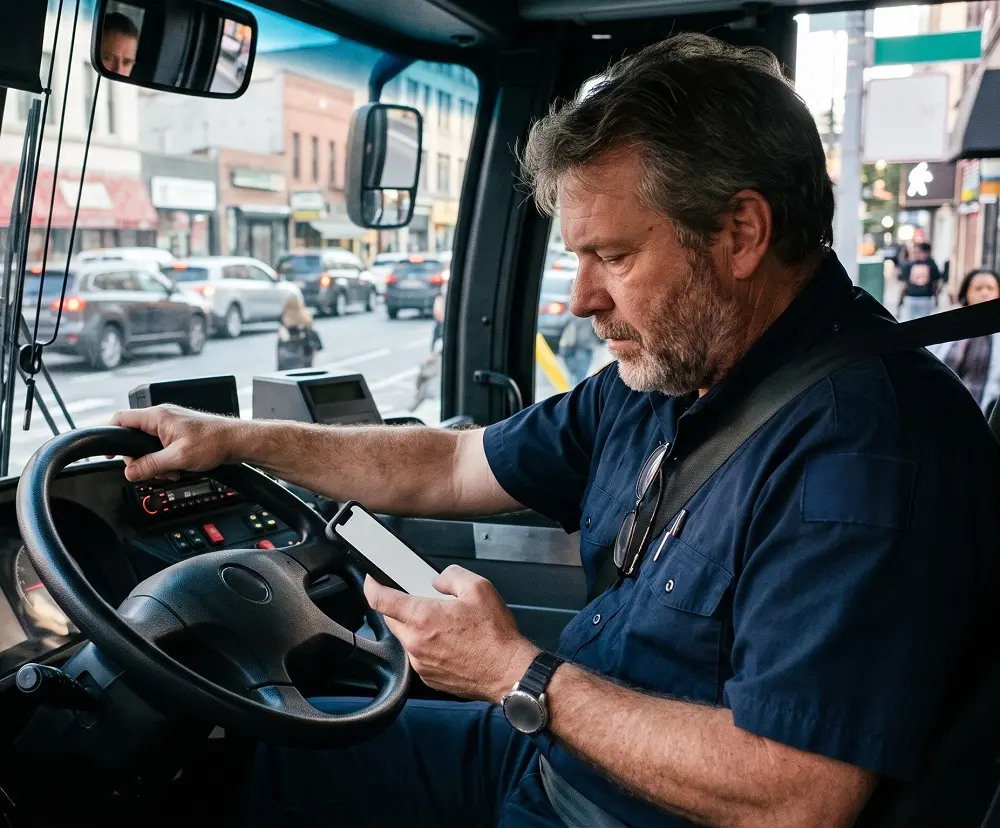
Most bus crashes trace back to preventable choices by a driver or the bus company, and identifying every piece of evidence that points to the responsible party is key.
Federal law bars a passenger-carrying driver from driving more than 10 hours after 8 hours off duty, or after 15 hours on duty. When a tour or charter company pushes a driver past these limits, the driving logs and dispatch records can establish negligence.
Worn brakes, bald tires, and skipped inspections turn a heavy vehicle into a hazard. Carriers must keep detailed maintenance records, and gaps in those records often reveal fault.
A driver looking at a phone, working under prescribed medication, or rushed through minimal training endangers everyone nearby. The large blind spots on buses make these lapses especially dangerous for pedestrians and cyclists sharing crowded tourist corridors.
Congestion along Las Vegas Boulevard, I-15, and the resort corridor forces bus drivers into constant stop-and-go conditions, and a moment of inattention can trigger a rear-end or sideswipe crash. Tour and shuttle drivers on tight schedules sometimes tailgate or make aggressive lane changes to stay on time, which raises the risk for every vehicle around them.
Transit buses, motorcoaches, and double-decker Deuce buses have wide blind spots along the sides and directly behind the vehicle, and drivers who fail to check mirrors before merging or turning frequently strike cars, cyclists, and pedestrians. Bus companies are expected to train drivers on mirror discipline and, on newer buses, to maintain camera and sensor systems that reduce these blind zones.
Southern Nevada sees sudden monsoon storms, flash flooding, and blowing dust that can drop visibility on I-15 and Route 95 within minutes. A bus driver who fails to slow down for rain-slick pavement or reduced visibility can lose control of a heavy vehicle, and the carrier may share fault if its safety policies did not require adjusting to hazardous weather.


Book a Free Consultation
Work with an experienced Las Vegas bus accident lawyer at Cameron Law on a contingency fee basis, meaning you pay nothing unless we recover compensation for you.
Available 24/7

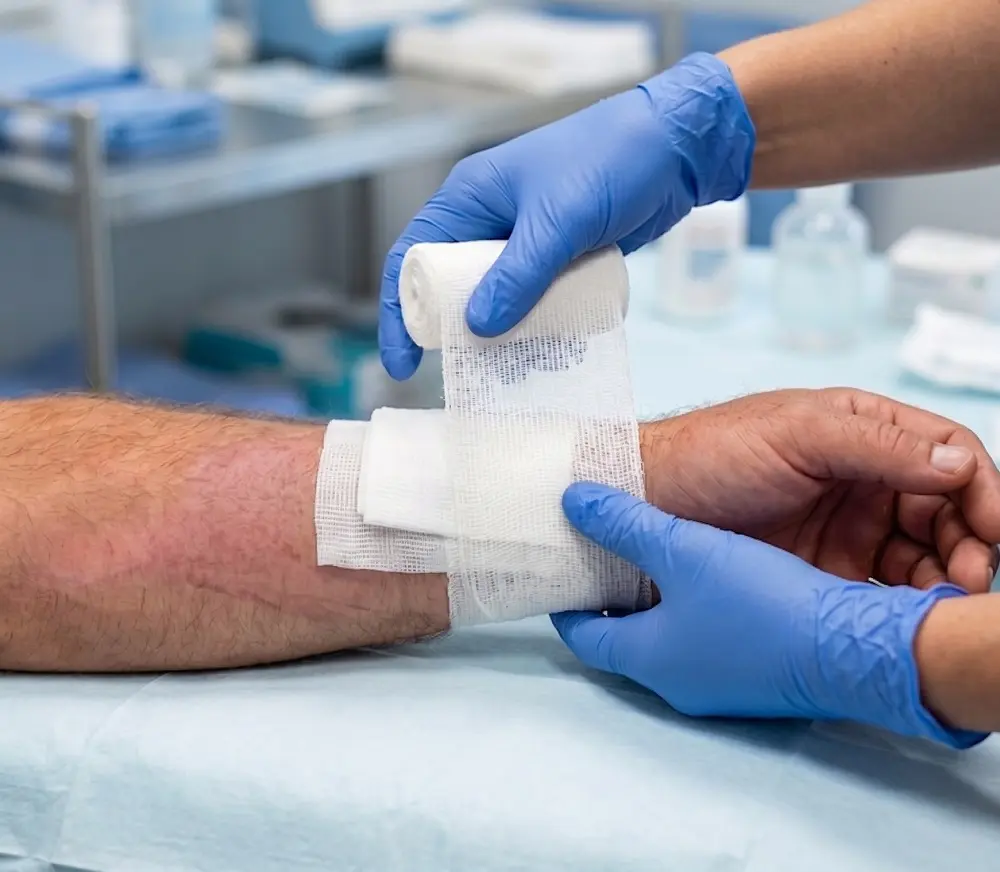
Bus accidents often result in a range of injuries, some immediately apparent, others surfacing later. Most transit buses have no passenger seat belts, which raises the risk of ejection and of passengers being thrown into windows, poles, and each other. Here are some common injuries sustained in bus accidents.
Concussions, contusions, and more severe traumatic brain injuries (TBI) can result from the forceful impact of a bus accident, particularly when passengers strike windows, poles, or seat frames. TBI symptoms sometimes surface days after the crash, which is why prompt medical evaluation matters even when you feel fine at the scene.
When a bus catches fire after a collision or a fuel line ruptures, passengers can suffer second- and third-degree burns that require skin grafts and long-term care. These injuries often lead to permanent scarring and significant non-economic damages.
In severe bus crashes, crush injuries and traumatic wounds may force surgeons to amputate a limb, either at the scene or during later treatment. The lifetime cost of prosthetics, rehabilitation, and lost earning capacity makes these among the highest-value bus accident claims.
Whiplash is one of the most common bus accident injuries, caused by the sudden back-and-forth motion of the head and neck during a rear-end or sudden-stop collision. Symptoms include neck pain, stiffness, headaches, and reduced range of motion that can last for months.
Catastrophic injuries such as paralysis, severe brain damage, and disfiguring burns permanently alter the victim's quality of life and earning capacity. These cases usually require lifetime medical care, home modifications, and around-the-clock support, all of which factor into the compensation you can pursue.
Damage to the spinal cord in a Las Vegas bus accident can lead to partial or complete paralysis, depending on the location and severity of the injury. Victims often need extensive medical care, physical therapy, and adaptive equipment, and many are unable to return to their prior work.
Herniated discs, muscle strains, and vertebral fractures are common after a bus crash because of the sudden jolting forces passengers experience without seat belts. Chronic back pain can require injections, physical therapy, or surgery, and it often limits a victim's ability to work.
Some Las Vegas bus accidents result in fatalities, leaving surviving family members facing funeral costs and lost financial support. Nevada law allows certain family members to file a wrongful death claim to recover damages for their loss under NRS 41.085.
Here are some parties that could be held liable for a bus accident in Las Vegas:
Driver negligence, such as distracted driving, DUI, speeding, or fatigued driving, is a common cause of bus accidents. A driver who ignores traffic laws, mishandles a wide turn, or gets behind the wheel while impaired can be held personally liable for the harm they cause.
Under NRS 706.036, bus operators are common motor carriers held to the highest degree of care, a standard that applies to RTC transit, tour and charter coaches, and hotel shuttles. A bus company can be liable for negligent hiring, inadequate driver training, poor maintenance, or safety violations, with evidence pulled from FMCSA driver qualification files, CDL passenger endorsement records, and hours-of-service logs.
Defects in the bus itself, such as faulty brakes, tires, or other mechanical issues, can lead to accidents. When a design flaw or manufacturing error contributes to a crash, the manufacturer and parts suppliers may face a product liability claim alongside the operator.
If a hazardous road condition, such as inadequate maintenance, contributed to the accident, a government entity could be held liable. The RTC of Southern Nevada, the City of Las Vegas, Clark County, or the Nevada Department of Transportation may also be responsible for defective traffic signals, poor road design, or negligent operation of a public bus.
In some situations, another driver's actions, such as reckless driving or running a red light, may cause a bus accident. When a third-party motorist forces a bus into an evasive maneuver or collides with it directly, injured passengers can pursue that driver's insurance in addition to any claim against the bus operator.
Investigating the accident to identify all potentially liable parties is an essential part of ensuring you have the opportunity to seek the full value of damages you are owed. We will work to understand exactly what happened and take steps to hold those at fault liable.


If a bus accident is caused by the negligence of a government entity, such as the City of Las Vegas, you may have grounds to file a claim. This could involve situations where the accident was a result of:
Claims against public buses such as the RTC require a notice of claim under NRS 41.036, and NRS 41.035 caps government tort damages at $200,000 per claimant with no punitive damages. Claims against a government entity follow specific procedures and have shorter filing deadlines, so it's crucial to contact our exceptional attorneys as soon as possible.
If you've been injured in a bus accident that wasn't your fault, you have the right to seek compensation for a wide range of damages, both economic and non-economic.
Here are some of the damages you may be able to recover:
Past, present, and future medical bills related to your injuries, including hospitalization, surgery, doctor visits, medication, physical therapy, and rehabilitation. In serious bus accident cases, projected future care costs and long-term rehabilitation often make up the largest single portion of the claim.
Compensation for income lost due to your inability to work as a result of your injuries, including past lost earnings and future lost earning capacity. When a bus accident forces a career change or leaves you unable to return to work at all, an economist can help quantify the full value of that loss.
This category compensates for the physical pain, emotional distress, and mental anguish you've endured as a consequence of the accident and your injuries. Nevada does not cap pain and suffering damages in most personal injury cases, so these non-economic losses can significantly increase your total recovery.
If your injuries prevent you from engaging in hobbies, activities, and social interactions that you previously enjoyed, you can seek compensation for this loss. This applies to everything from missed family milestones to the inability to hike, travel, or exercise the way you did before the bus crash.
Repair or replacement costs for any personal property damaged in the accident, such as your vehicle, phone, or other belongings. If you were a passenger, this can also cover luggage, laptops, and other items destroyed in the crash.
In the tragic event of a fatality, family members may be eligible to pursue compensation for funeral expenses, loss of companionship, loss of financial support, and other damages. Under NRS 41.085, surviving spouses, children, and certain heirs can bring a wrongful death claim on behalf of the decedent's estate.

Nevada law imposes certain limitations on the amount of compensation you can receive in a personal injury lawsuit, including bus accident cases. These limitations vary depending on the type of damages and the circumstances of the accident.
Talk to a Las Vegas bus accident attorney like us to understand how these limitations might affect your specific case. We can assess your damages, identify any applicable caps, and develop a strategy to pursue the maximum compensation available to you.

Nevada follows a "modified comparative negligence" rule when determining fault and damages in accident cases. This means that even if you were partially at fault for the bus accident, you may still be able to recover compensation, but the amount you receive will be reduced based on your percentage of fault.
For example, if you are found 20% at fault for the accident and your damages total $100,000, you will only be able to recover $80,000 (80% of your total damages). However, if you are found 51% or more at fault, Nevada law prevents you from recovering any compensation.

For personal injury cases in Nevada, including those involving bus accidents, the statute of limitations is generally two years from the date of the accident under NRS 11.190. If you don't file a lawsuit within this two-year period, you will likely lose your right to seek compensation in court.
It's important to contact a Las Vegas bus accident lawyer as soon as possible following your accident. This will ensure that you don't miss any crucial deadlines and that you have the best possible chance of recovering full and fair compensation for your injuries and losses.

Book a Free Consultation
Ready to discuss your case with a Las Vegas bus accident attorney? We're here to help.
Available 24/7
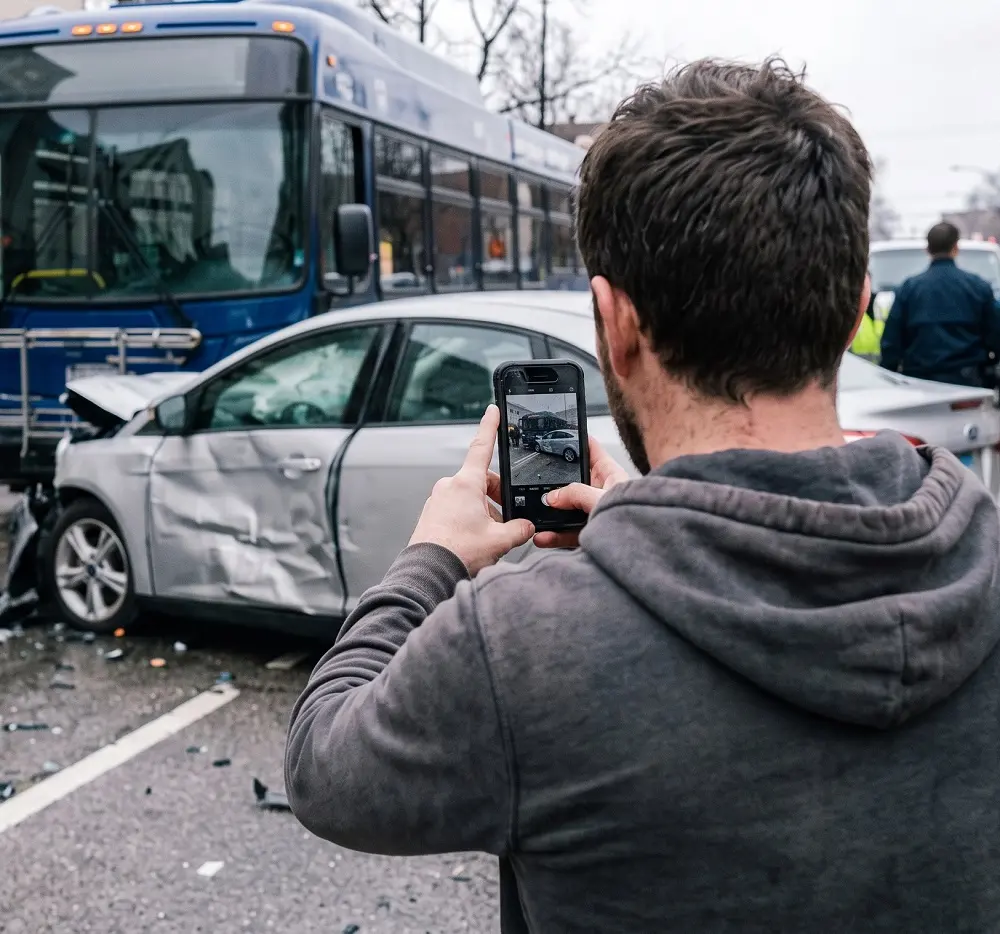
What you do in the first hours and days after a bus crash can protect both your health and the value of your claim. The steps below apply whether you were a passenger, a pedestrian, or a driver hit by an RTC bus, tour bus, or shuttle:
At Cameron Law, we're dedicated to providing compassionate and effective legal representation for victims of bus accidents in Las Vegas. When you choose us, you're choosing a team that prioritizes your needs and fights tirelessly to protect your rights.
Here's how we make a difference:
Proven Track Record
We have a history of successfully securing favorable outcomes for our clients, including significant settlements and trial verdicts.
Client-Centered Approach
We prioritize providing open communication, personalized attention, and unwavering support throughout your case.
No Fee Unless We Win
We work on a contingency fee basis, so you pay nothing unless we win your case.

.avif)


A bus accident can turn your life upside down, but you don't have to go through it alone. At Cameron Law, we have the experience, knowledge, and dedication to fight for your rights and help you pursue the compensation you deserve.
Most bus accident cases are settled out of court through negotiations with insurance companies. However, if a fair settlement cannot be reached, we are prepared to take your case to trial and fight for your rights in court.
Even if the bus wasn't a public transit bus, the same principles of negligence and liability apply. We can help you determine which parties are at fault, whether it's the driver, the tour company, the hotel, or another entity. Because these operators are common carriers under Nevada law, they owe a heightened duty of care to their passengers.
Nevada's general personal injury deadline is two years from the date of the crash under NRS 11.190. Claims against the RTC or another government entity carry an additional notice-of-claim requirement under NRS 41.036, and damages are capped at $200,000 per claimant under NRS 41.035. Because the notice window is short, contact a lawyer as soon as possible.
Liability depends on the operator and the cause. A negligent driver, the bus company, a maintenance contractor, or even a government entity responsible for hazardous road conditions may share fault. Bus operators owe a duty of care to pedestrians and cyclists as well as passengers, and Nevada's comparative negligence rule allows recovery so long as you were less than 51% at fault.